Are Financial Statements Necessary?
Are Financial Statements Necessary? The short answer is: Yes.
Financial statements are not paperwork for your accountant. They are not compliance documents you glance at once a year before filing taxes. They are decision tools that can help you run your business successfully.
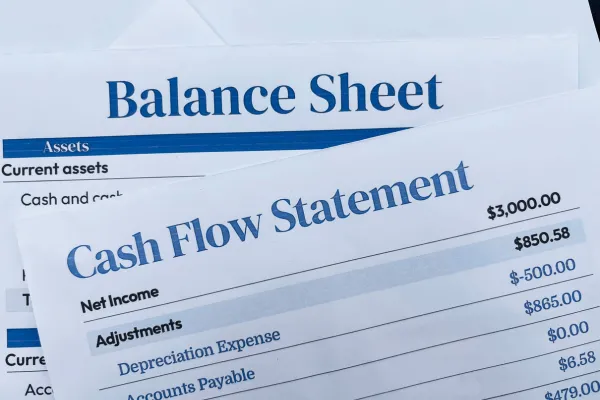
We’re talking about financial statements like a balance sheet, income statement, or cash flow statement.
As a business owner your financial statements are your dashboard. Flying without them is like piloting an aircraft with the instruments turned off. You may feel confident. You may even be climbing. But you have no objective data showing you where you’re actually at as a company.
There are three core financial statements every business owner must understand.
1. Profit & Loss Statement (Income Statement)
The Profit & Loss statement measures performance over a specific period of time.
It shows:
Revenue
Expenses
Gross margin
Net profit
This statement answers a critical question: Is the business profitable?
But more importantly, it shows how profitable — and where pressure may be building.
Are margins compressing?
Are expenses rising faster than revenue?
Is net profit shrinking even though top-line sales look strong?
Revenue alone is not performance. Margin is.
A healthy P&L allows you to see trends over time. Month-over-month and year-over-year comparisons reveal whether your decisions are improving efficiency or creating hidden strain.
2. Balance Sheet
If the P&L measures performance, the balance sheet measures stability.
It shows:
Assets
Liabilities
Equity
It answers two foundational questions:
What do we own?
What do we owe?
The balance sheet reveals leverage, liquidity, and structural strength. A company can show profit on the P&L while quietly accumulating debt on the balance sheet. It can grow revenue while weakening financially.
Entrepreneurs often focus on growth. The balance sheet forces you to focus on durability.
Are liabilities increasing faster than assets?
Is equity strengthening?
Are you building ownership — or simply expanding obligations?
Without reviewing the balance sheet, you may mistake motion for progress.
3. Cash Flow Statement
The cash flow statement measures liquidity.
It shows how money actually moves through the business — not just what is recorded as profit.
Profit can be misleading.
You can show strong net income and still experience cash shortages if receivables lag, inventory expands, or debt payments increase.
The cash flow statement answers:
Do we have the liquidity to operate and grow safely?
Cash flow determines survival. It funds payroll. It supports expansion. It protects you during volatility.
Profit is theory.
Cash is reality.
Why Monthly Review Matters
Reviewing financial statements annually is too late.
By the time you see a problem at year-end, you have lived with it for twelve months.
Monthly review reveals:
Margin compression
Rising debt ratios
Expense creep
Revenue volatility
Declining liquidity
These signals allow you to adjust early.
Entrepreneurs who ignore their statements operate emotionally. They make decisions based on stress, optimism, or instinct.
Entrepreneurs who review their statements allocate capital intentionally.
They respond to data, not feelings.
Capital Allocation Is the Real Game
Wealth is not built by earning alone.
It is built by allocating wisely.
Financial statements empower you to decide:
Should we reinvest profits?
Should we pay down debt?
Should we build cash reserves?
Should we expand — or stabilize?
Without financial statements, you guess.
With them, you lead.
They transform you from operator to strategist.
And strategy — not revenue — is what ultimately builds lasting wealth.


