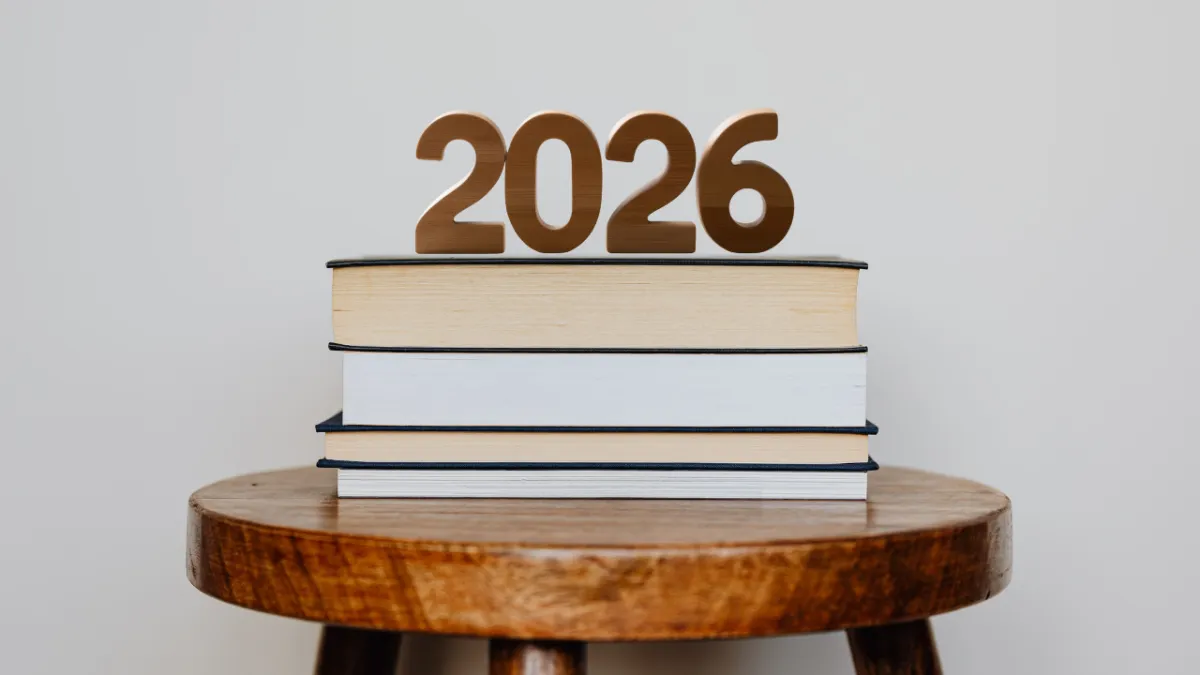
Best Business Books for 2026
Not every business book earns a place on a founder’s desk.
Early on, business books tend to focus on tactics. How to start. How to market. How to sell. But as responsibility increases, those questions give way to deeper ones. How do I make better decisions? How do I reduce financial friction? How do I think clearly when the consequences are bigger?
The best business books for 2026 are the ones that help with those questions. They are not built around hype or hustle. They sharpen judgment. They reveal patterns. They make tradeoffs easier to see before they get expensive.
This list is not designed to motivate. It is designed to orient.
What Makes a Business Book Worth Reading in 2026?
Not all business books age well. Some rely on trends that fade quickly. Others oversimplify challenges that become more complex over time.
In 2026, business owners will benefit most from books that focus on:
Decision-making under uncertainty
Financial awareness rather than restriction
Leadership responsibility and pressure
Long-term thinking instead of short-term wins
The best business books for 2026 help readers understand how systems interact, rather than telling them exactly what to do next.
Business Books That Improve Financial Awareness
Financial success is rarely limited by math. More often, it is shaped by behavior, timing, and perspective.
What Would Billionaires Do?
This book reframes wealth through the lens of decision-making rather than income. It explores how high-level financial choices differ from conventional thinking and why awareness matters more than tactics.
Instead of focusing on accumulation, it emphasizes architecture: how money moves, how risk compounds, and how long-term flexibility is created.
Budgeting Sucks
Traditional budgeting often breaks down as complexity grows. This book challenges the idea that restriction leads to control and replaces it with awareness-based financial thinking.
It helps business owners understand cash flow, timing, and behavior without relying on rigid rules that rarely survive real life.
The Psychology of Money
This book examines how emotions, history, and incentives shape financial decisions. It explains why intelligent people still make costly mistakes and why patience and perspective often outperform precision.
Together, these books highlight why financial clarity comes from understanding behavior, not just numbers. That is a core theme of the best business books for 2026.
Business Books That Strengthen Decision-Making
As businesses mature, fewer decisions are obviously right or wrong. Most live in gray areas shaped by probability and tradeoffs.
Thinking in Bets
This book reframes decisions as bets made under uncertainty. It separates outcomes from decision quality and encourages clearer thinking even when results are unpredictable.
For business owners navigating complex choices, this mindset reduces emotional decision-making and improves consistency over time.
The 80/20 Principle
This classic focuses on leverage. It shows how a small number of inputs often drive most outcomes and why effort alone is not a reliable strategy.
In 2026, recognizing leverage is more valuable than working harder. This book trains readers to identify where attention actually matters.
Business Books That Address Leadership Pressure
Growth introduces pressure that tactics cannot solve. Leadership requires judgment, restraint, and resilience.
The Hard Thing About Hard Things
This book offers an unfiltered look at leadership during uncertainty. It avoids clichés and addresses the emotional weight of responsibility.
It resonates with business owners who have discovered that success does not eliminate difficulty. It often changes its form.
High Output Management
Focused on systems and managerial leverage, this book helps leaders build organizations that function beyond individual effort.
It is especially useful for owners shifting from doing the work to designing how the work gets done.
These titles reinforce why the best business books for 2026 emphasize thinking clearly under pressure rather than chasing inspiration.
How Business Owners Should Use These Books
Reading more is not the goal. Reading better is.
The best business books for 2026 work best when used intentionally:
Read with a current challenge in mind
Revisit books as circumstances change
Focus on insight, not immediate execution
Many insights are meant to shape perspective over time. Acting too quickly is often more expensive than waiting.
Why Re-Reading Matters More Than Reading More
One of the most overlooked benefits of the best business books for 2026 is how their meaning changes over time.
A book read during one season of business often lands differently in the next. Early on, certain ideas may feel abstract or unnecessary. Later, those same passages suddenly feel practical, even urgent. This shift does not happen because the book changed. It happens because the reader did.
As responsibility grows, business owners begin to recognize patterns instead of isolated lessons. A chapter on decision-making connects to cash flow timing. A discussion on leadership pressure mirrors a current personnel challenge. A section on risk suddenly feels personal rather than theoretical.
This is why re-reading is a strategic habit, not an academic one.
Business owners who revisit the best business books for 2026 tend to:
Notice tradeoffs they previously overlooked
Recognize recurring themes across different challenges
Slow decisions long enough to evaluate second-order effects
Re-reading creates continuity. It allows insight to compound rather than reset. Instead of constantly searching for new answers, business owners deepen their understanding of familiar principles and apply them with greater precision.
In a world saturated with new ideas, returning to the right ones often delivers the greatest clarity.
Common Mistakes Business Owners Make With Business Books
Even experienced entrepreneurs fall into predictable traps:
Treating books as instruction manuals
Consuming content built for a different stage of ownership
Reading for reassurance instead of clarity
Jumping between ideas without integration
Books are tools for orientation, not prescriptions.
Frequently Asked Questions
Are business books still useful for experienced entrepreneurs?
Yes. Their value shifts from tactics to perspective. Books help refine judgment rather than provide instructions.
How many business books should a business owner read each year?
Fewer than most people expect. Depth and re-reading often deliver more value than volume.
Can business books improve financial decision-making?
Yes, especially when they focus on awareness, behavior, and systems instead of rules.
Why Reading Still Matters
The best business books for 2026 are not about doing more. They are about seeing more clearly.
As responsibility grows, clarity becomes a competitive advantage. Books that slow thinking just enough to improve judgment can shape decisions for years, not days.
In a world full of advice, choosing what to read and what to ignore is a leadership skill. And in 2026, that skill matters more than ever.
Disclaimer and Waiver
Wealth Factory, LLC®, its owners, officers, directors, employees, subsidiaries, service providers, content providers and agents (referred to as 'Wealth Factory') are not financial or investment advisors and not licensed to sell securities or investments. None of the information provided is intended as investment, tax, accounting or legal advice, as an offer or solicitation of an offer to buy or sell, or as an endorsement, of any company, security, fund, or other offering.
The information should not be relied upon for purposes of transacting securities or other investments. Your use of the information contained herein is at your own risk. The content is provided 'as is' and without warranties, either expressed or implied. Wealth Factory does not promise or guarantee any income or particular result from your use of the information contained herein.
Under no circumstances will Wealth Factory be liable for any loss or damage caused by your reliance on the information contained herein. It is your responsibility to evaluate any information, opinion, advice or other content contained. Please seek the advice of professionals, as appropriate, regarding the evaluation of any specific information, opinion, or other content.


